Saudade (2026) for Alto Flute & Piano

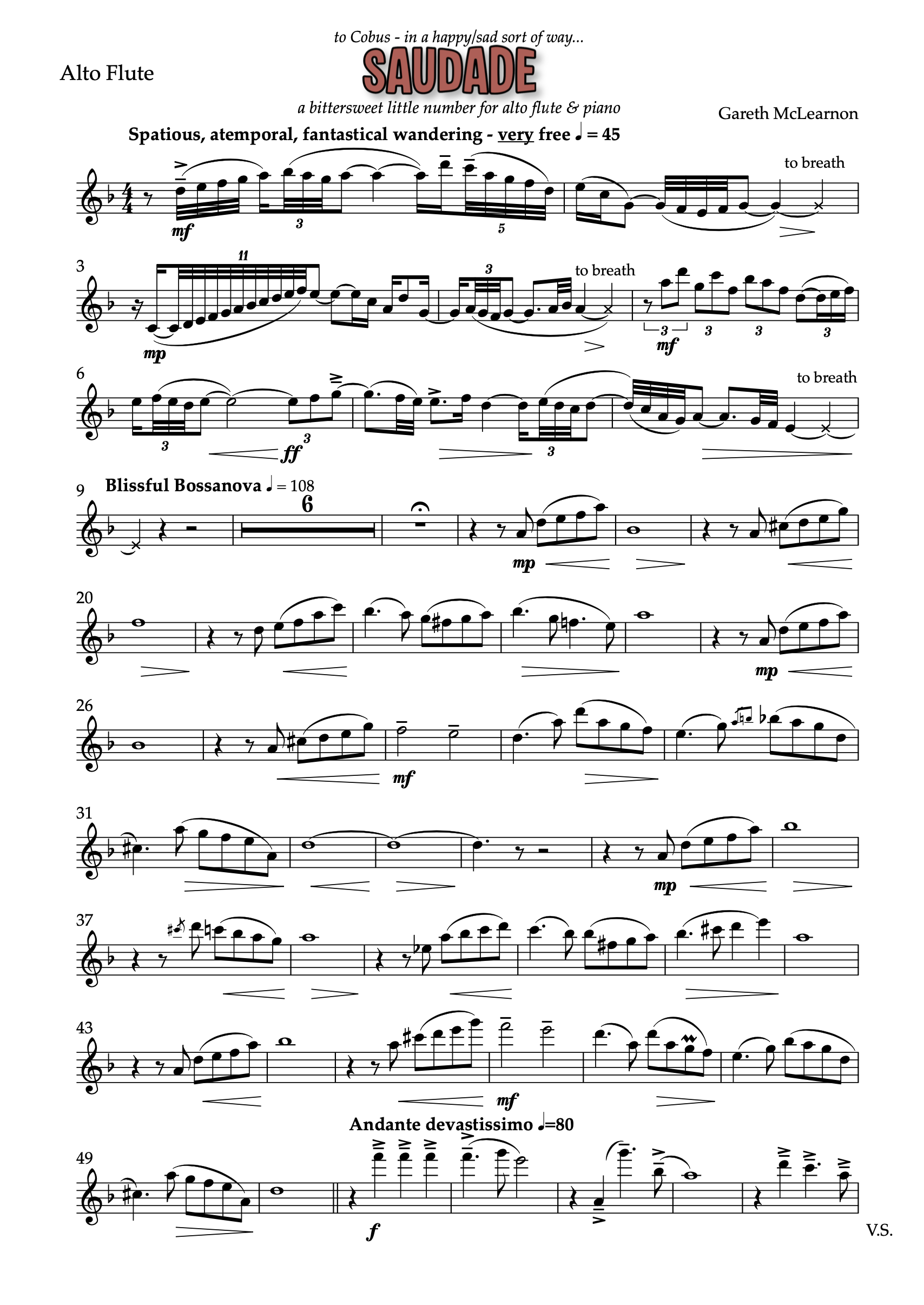
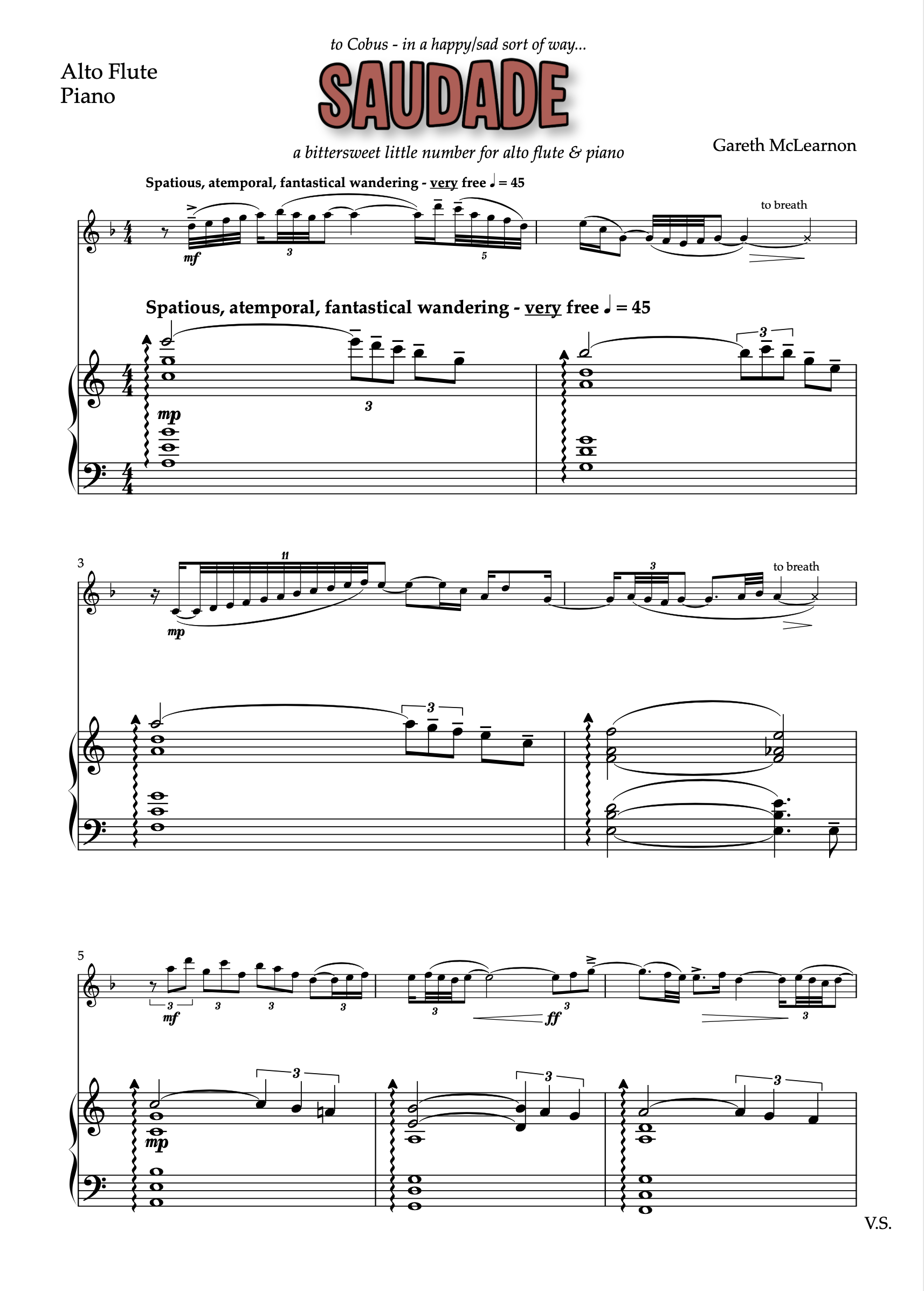
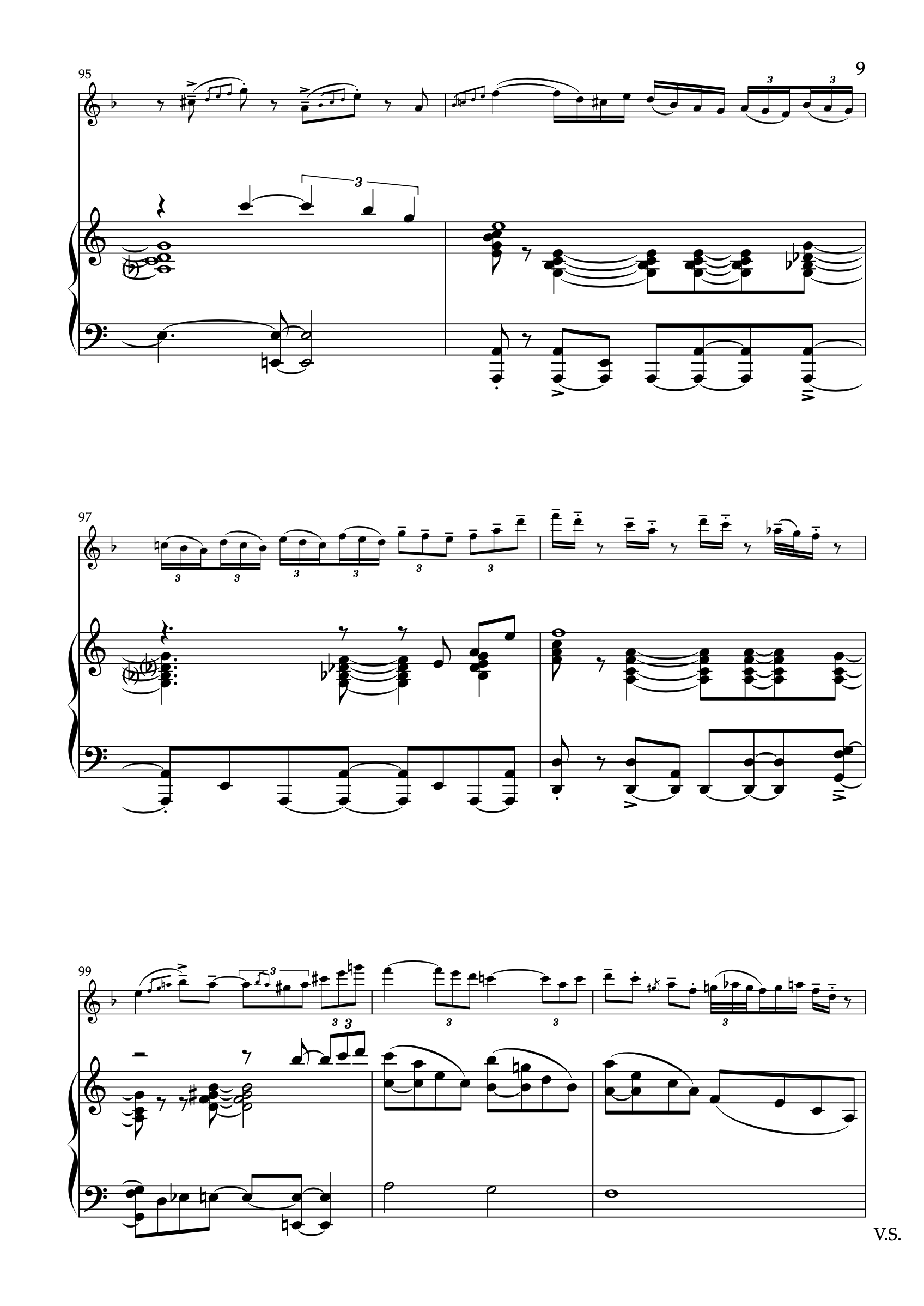
Saudade (2026) for Alto Flute & Piano
Saudade
Saudade was born on one of those days that felt almost offensively perfect.
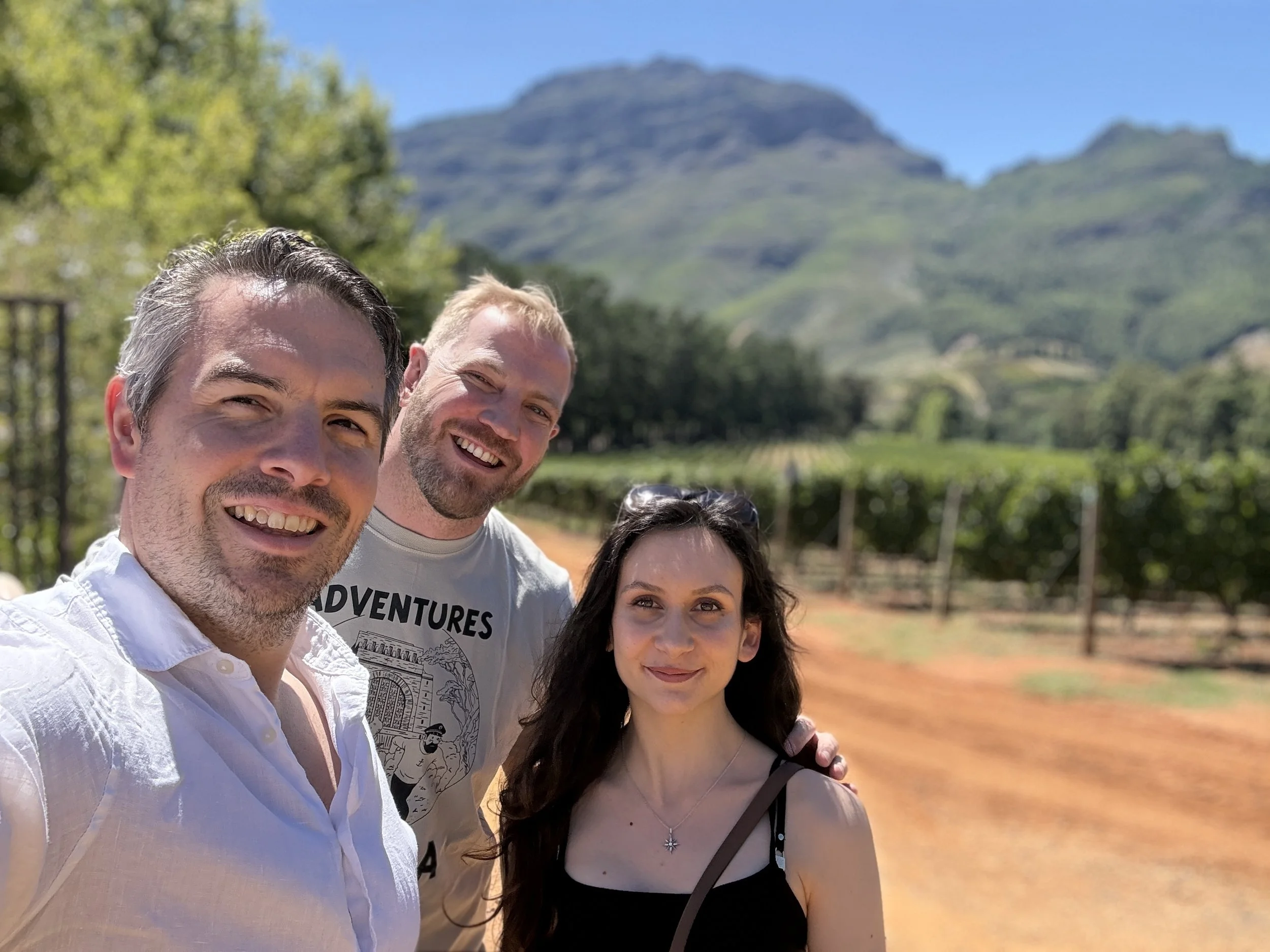
I was in the Western Cape with my friend and colleague Cobus du Toit, sitting at Tokara Wine Estate near Stellenbosch with coffee and brownies. The sky was completely blue, the mountains and vineyards were spectacular, everything was lush and green, and somehow the temperature was a perfectly comfortable 24 or 25 degrees Celsius (around 76F). (see photo!)
Cobus looked out at it all and asked whether there was a word for that strange feeling of being completely, blissfully happy while already feeling desperately sad because you know the moment has to end.
We discovered the Portuguese word Saudade.
And I immediately said: “And THAT is the piece I’m going to write for you.”
Quick Details
Instrumentation: Alto Flute & Piano
Written for Cobus du Toit
Contemporary Bossa Nova / jazz-influenced style
Advanced, with an optional more approachable intermediate jazz solo
Fully written-out improvised-style solo
Alternative intermediate level solo accessed by QR code in every copy
Extended alto-flute range used for expressive effect
Sophisticated jazz-influenced piano writing
World premiere given by Cobus du Toit and Eugene Joubert in Johannesburg, June 2026
European premiere: Budapest Flute Academy, 16 September 2026
Recorded by Cobus du Toit and Eugene Joubert
A Ridiculously Perfect Day
The circumstances really were central to the piece.
It was one of the most beautiful days I can remember experiencing: brilliant sunshine, a completely clear sky, the Western Cape mountains in the distance, vineyards and flowers everywhere, and weather which looked as though it ought to be scorching but somehow wasn’t.
Everything felt absolutely right.
And that was exactly the problem.
You know it can’t last.
That strange mixture of contentment and loss became the emotional core of the piece.
Why Alto Flute?
As soon as the idea appeared, alto flute felt like the right instrument.
Its middle and lower registers can be mellow, warm, relaxed and deeply contented. It can sound almost impossibly comfortable.
Then take it into the upper register and the emotional temperature changes completely. There is tension there, vulnerability, and at the very top of its range it can sound almost desperate.
That gave me exactly the palette I wanted: happy, mellow, wistful, melancholy and, when necessary, completely tragic.
From Portugal to Bossa Nova
The word saudade is Portuguese, and that immediately sent my brain towards Bossa Nova.
That is honestly as complicated as the connection was.
The musical language grew from there into a fairly classic Bossa Nova world, with smooth jazz-influenced harmony, relaxed rhythmic movement and an alto-flute line which can sit very comfortably above it.
Most of the time the music simply enjoys being where it is.
Then things go terribly wrong.
Tragicchissimo
Twice during the piece, the relaxed Bossa Nova atmosphere is interrupted by something considerably less restrained.
I marked these moments tragicchissimo.
They are deliberately overblown.
The piano suddenly becomes huge and almost cinematic, while the alto flute makes enormous leaps which should feel almost like sobbing. I wanted the contrast to be very obvious: one moment everything is warm, easy and contented; suddenly the knowledge that it cannot last becomes completely overwhelming.
Subtle sadness was not really the plan.
The Jazz Solo
There is a substantial jazz solo in the piece which is completely written out, although it should sound as though the player is improvising.
The full version is fairly demanding and gives an advanced alto flutist a proper technical workout.
I also wanted the piece to be accessible to players who could handle the rest of the music but might find that solo a step too far, so every copy contains a QR code linking to an intermediate alternative.
That version keeps the same musical shape and harmonic context while making the technique considerably more approachable.
And if somebody wants to mix bits of the two versions together, I’m not particularly precious about it.
The whole point is that it should feel spontaneous.
The Piano
The piano part lives very comfortably inside the same jazz and Bossa Nova language.
It has sophisticated harmony, satisfying chord changes and plenty of detail for a good pianist to enjoy without overwhelming the alto flute.
Eugene Joubert, who has performed and recorded the piece with Cobus, has been particularly complimentary about the writing, which pleased me enormously.
The piano creates the world around the flute, but the alto flute remains the principal voice.
Written for Cobus du Toit
This wasn’t a formal commission.
It came directly out of that conversation at Tokara.
I had already written Saudade in my head conceptually before we had finished the coffee: the title, the emotional idea and the alto flute were all there at once.
Cobus subsequently gave the world premiere with Eugene Joubert in Johannesburg in June 2026, and they have also recorded the work together.
I wrote Saudade specifically for Cobus, and I love the fact that it now sits alongside Roots in his recital repertoire. They inhabit very different musical worlds, but both give the flute a strong narrative and emotional role.
The Ending
Bossa Nova gives you the temptation to fade gently into the distance.
I don’t especially enjoy endings where the audience has to look anxiously at one another and wonder whether they are allowed to clap yet.
So Saudade almost fades.
The alto flute rises through delicate trills above a warm final harmony, and for a moment it feels as though the piece might simply float away.
Then the pianist gives it a proper final and solid BIDDLY-BOP.
Done well, it should raise a smile, perhaps even a laugh, and remove absolutely any doubt about whether the piece has finished.
The audience may applaud with confidence.
Difficulty
Saudade is principally an Advanced alto-flute work.
The full jazz solo requires confident technique, stylistic flexibility and the ability to make carefully written material sound genuinely spontaneous. The alternative solo makes the piece significantly more approachable for an intermediate player without changing the overall musical experience.
The expressive challenge matters just as much as the technical one. The performer has to move convincingly between relaxed Bossa Nova ease, wistfulness and those deliberately enormous tragic outbursts.
Frequently Asked Questions
Who was Saudade written for?
Cobus du Toit, following a conversation we had at Tokara Wine Estate near Stellenbosch in March 2026.
What does Saudade mean?
It is a Portuguese word associated with longing, absence and melancholy. For this piece, it came from Cobus’s description of being intensely happy while already feeling sad because you know the moment cannot last.
What style is the piece?
The main musical language is Bossa Nova and jazz-influenced, interrupted by two deliberately extravagant tragicchissimoepisodes.
Is the jazz solo improvised?
No. It is completely written out but intended to sound improvised.
Is there an easier version of the solo?
Yes. Every copy includes a QR code giving access to a technically easier intermediate alternative.
Can I combine material from the two solos?
Absolutely. If a player prefers individual phrases from one version or the other, I’m very happy for them to mix and match.
How difficult is the piano part?
It is sophisticated and harmonically rich, with idiomatic jazz-influenced writing, but the alto flute remains the featured voice.
How does it end?
Almost wistfully. Then the pianist makes absolutely sure everyone knows it is over.
A digital piano backing track is also available for purchase here.
ALSO - limited edition - handwritten title version available exclusively from my website while stocks last! See here for details - SEVEN copies remaining at time of writing.