Genesis Protocol (2026) for Two Flutes & Piano
Genesis Protocol (2026) for Two Flutes & Piano
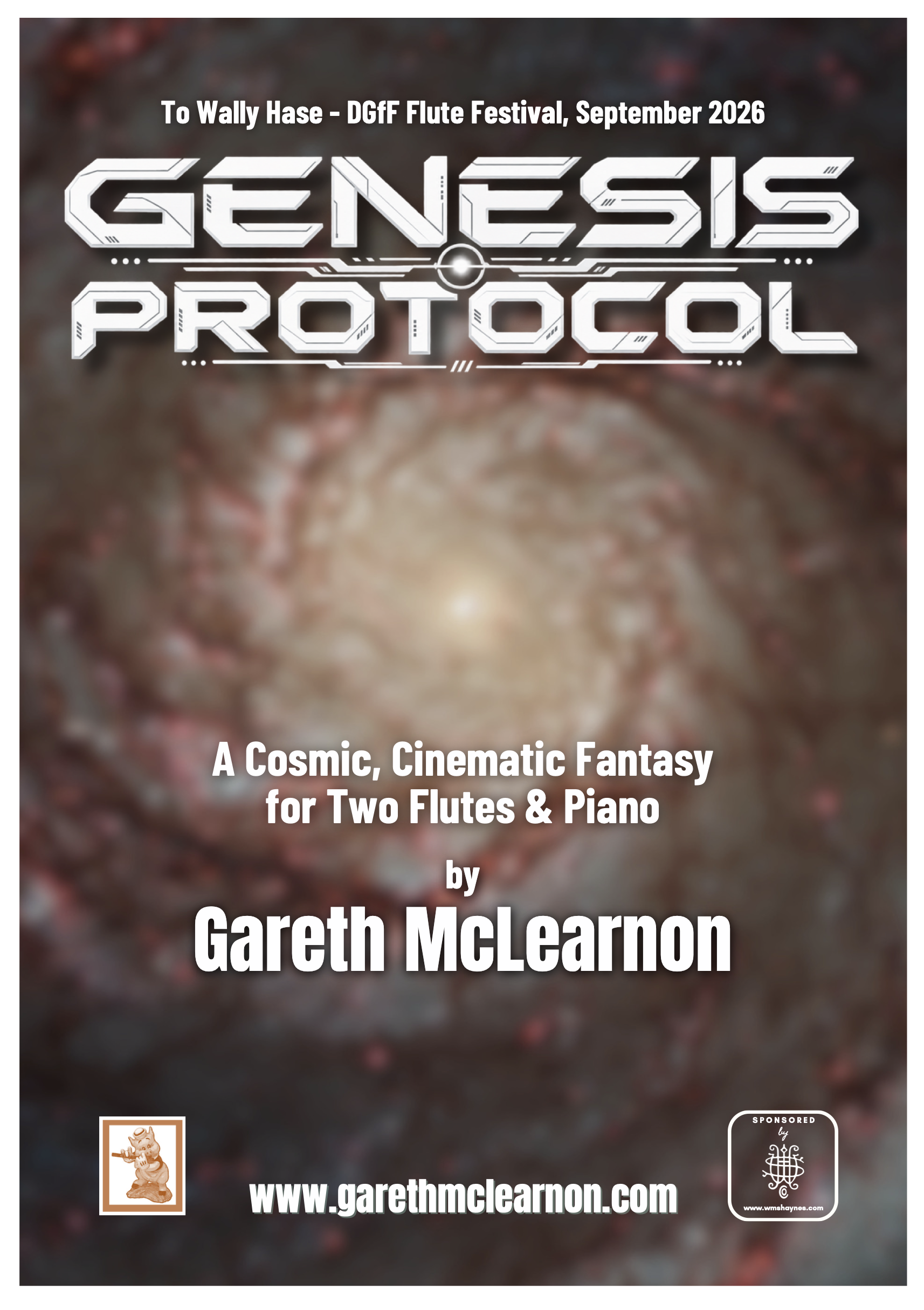
GENESIS PROTOCOL (2026) for Two Flutes & Piano
A cosmic, cinematic fantasy for two flutes and piano, unapologetically science-fiction in both theme and content.
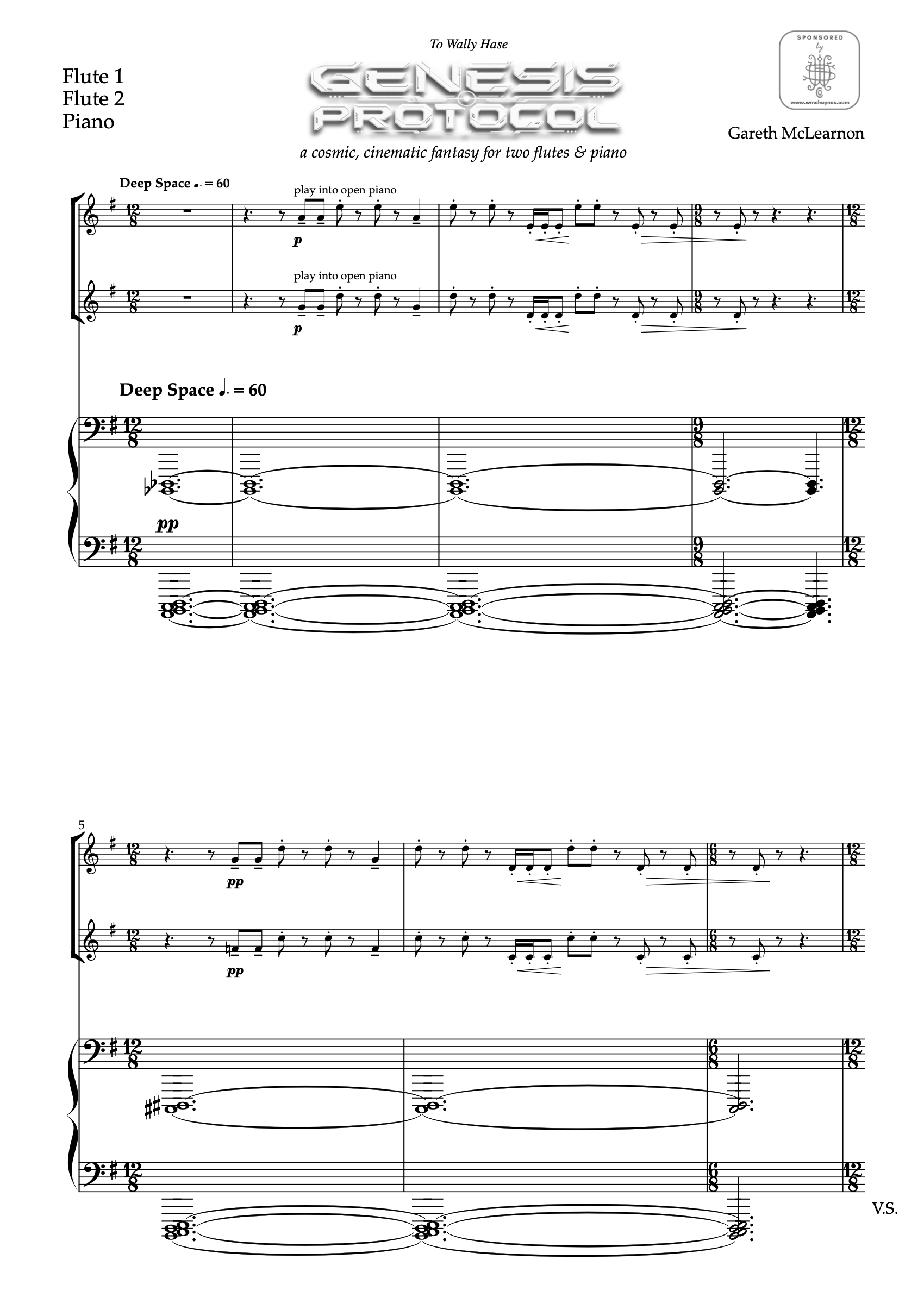
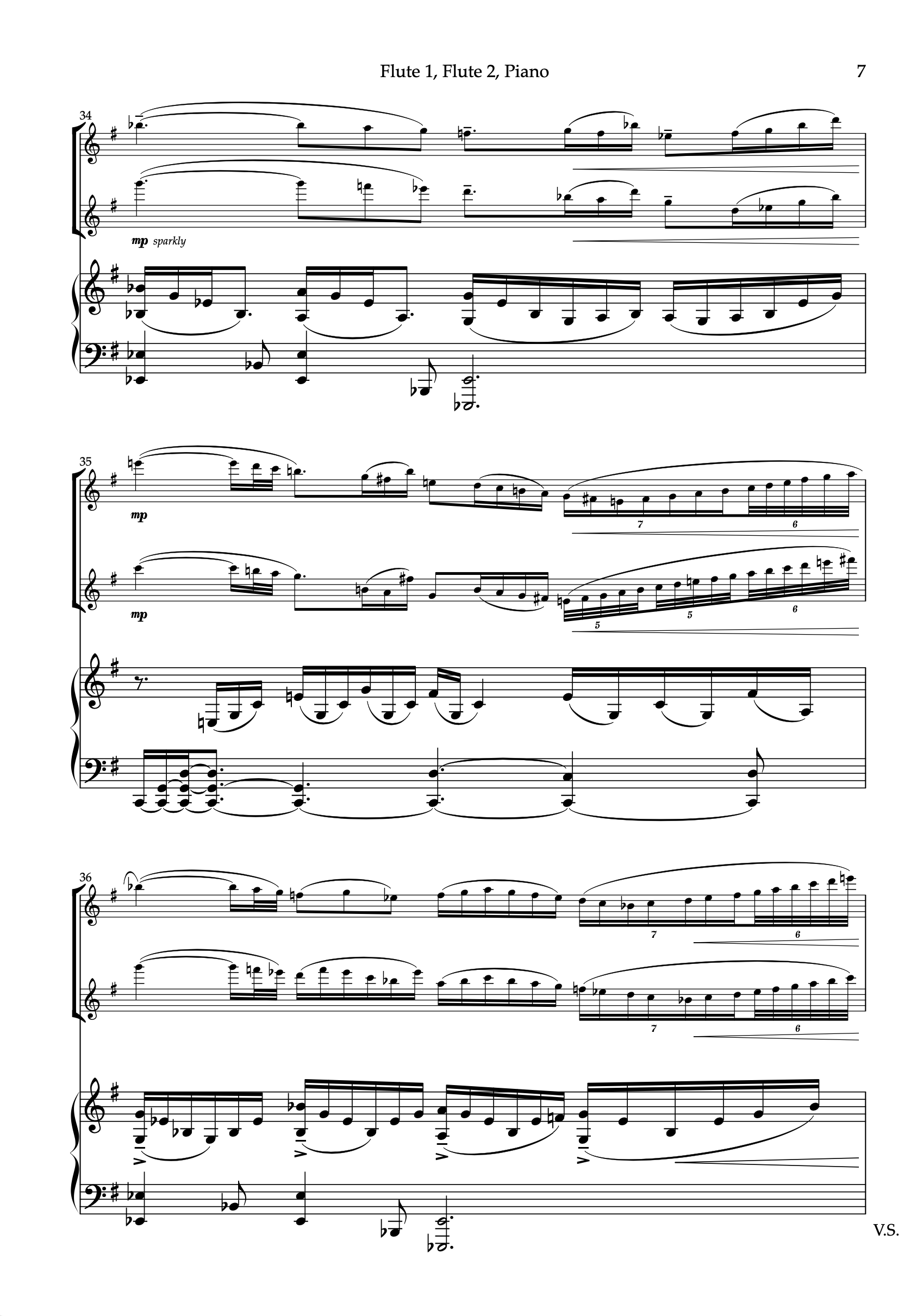
Genesis Protocol begins in deep space, with a lone beacon spelling G-E-N-E-S-I-S in Morse code. From an atmospheric, luminous opening, the music bursts into flowing Lydian colour before the spell is finally broken and we launch into the groove-driven second half.
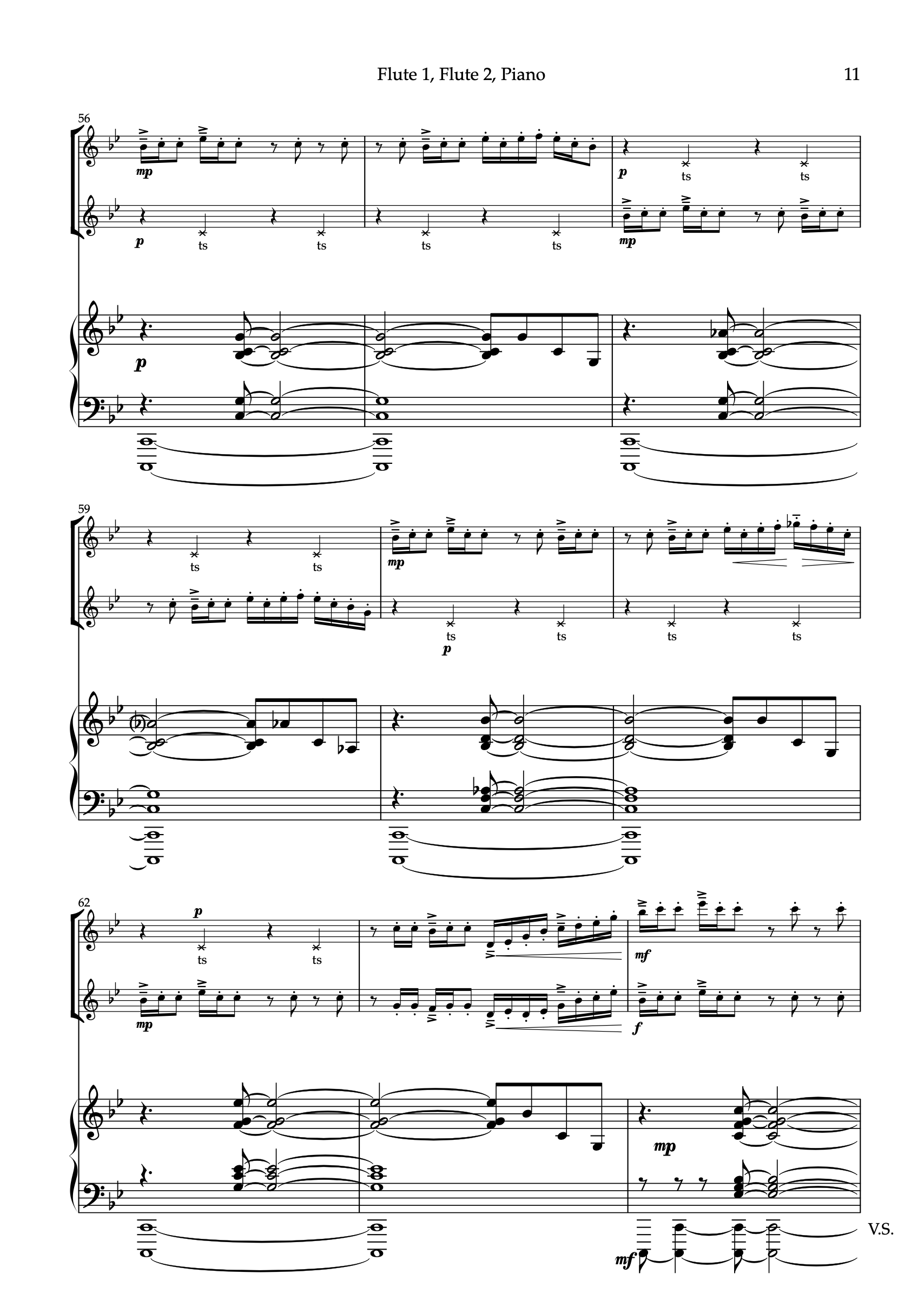
Inspired rhythmically by the three-syllable word “Protocol”, the two equal flute parts duel, interlock and race through cross-rhythms, extended techniques and a rather strange little cadenza before winding themselves up for a fast-tracked race to a very big finish.
Openly cinematic, slightly nerdy and enormous fun to play.
Quick Details
Instrumentation: 2 Flutes & Piano
Duration: Approx. 6 minutes
Level: Advanced / Conservatoire
Flute Parts: Two equal parts
Piano: Moderate difficulty, rhythmically engaging and comfortable under the hands
Style: Cinematic, atmospheric, rhythmic and groove-driven
Extended Techniques: Jet whistles, pitched jet whistles, explosive articulation and tongue pops
Edition: Printed score
Composed: 2026
Dedicated to: Wally Hase
World Premiere: German Flute Festival, Essen, September 2026
About the Music
The piece opens with the tempo marking Deep Space.
Out of the darkness, a lone beacon begins signalling its presence. The two flutes spell G-E-N-E-S-I-S in Morse code, repeating the rhythm with increasing urgency until suddenly the whole musical landscape bursts into light.
What follows is a festival of flowing, exuberant Lydian colour, with the two flutes winding around one another as completely equal voices.
Eventually we return to the G-E-N-E-S-I-S signal once more, this time quieter and more reflective.
Then things get cool.
The second half takes its rhythmic DNA from the three syllables of the word “PRO-to-col”, launching into a fast, groove-driven duel with more than a little Space: 1999 and Star Trek in its bloodstream.
The flutes race, spar and interlock before the music falls apart into a miniature cadenza of strange pops, whistles and other extraterrestrial noises.
Then the machinery winds itself up again for a fast-tracked race to the end, finishing with a very large BLAM.
Think Death Star at the end of A New Hope and you’re somewhere in the right vicinity.
The Story Behind Genesis Protocol
Genesis Protocol grew out of the launch of the new Haynes Genesis flute.
Haynes asked me to take part in the presentation of the instrument at the German Flute Festival in Essen. Rather than simply appearing in a commercial showcase, I thought it would be much more interesting to create something with a dual purpose: the presentation of a completely new flute alongside the first performance of a completely new piece.
But then the German Flute Society decided that they wanted the world premiere to take place as part of the festival concert programme rather than inside the Haynes presentation.
So the Haynes event became a kind of teaser trailer, where Wally Hase and I could talk about the piece, explain some of the ideas behind it and play a few excerpts before giving the complete world premiere later that morning as well as talking about this new flute!
The work is written for and dedicated to my dear friend and colleague Wally Hase, for us to play together.
For the Flutists
This is very much a piece for two equal players.
There is no first flute carrying the important material while the second accompanies. Both parts are active, busy and fully involved, constantly passing material backwards and forwards, playing together and pushing against one another.
The flute writing sits around conservatoire level, although very strong high-school players with good rhythmic confidence should also find it achievable.
The music is intended to feel theatrical rather than abstract. Its character is quite openly stated, so there is plenty for the players to get hold of immediately: mystery, space, light, groove, competition and eventually complete mayhem.
Extended Techniques
There are several contemporary techniques in Genesis Protocol, but they are used as part of the musical character rather than simply as special effects.
The opening section includes unusually gentle jet whistles, intended to sound more like cosmic wind than the aggressive jet-whistle gesture we often associate with the flute.
At one point the two players produce pitched jet whistles in harmony, creating a small minor-third sonority. This was a new experiment for me and produces a wonderfully strange, atmospheric sound.
Later, explosive articulation effectively breaks the spell of the ethereal first section and opens the door into the rhythmic second half.
There are also tongue pops, used almost like flute pizzicato during the freer cadenza passage.
For the Pianist
The piano provides the atmosphere, harmonic landscape and rhythmic engine underneath the two flutes.
While the flute writing is intentionally demanding, the piano part is more moderate in difficulty and is written to sit comfortably under the hands.
There are some rhythmically interesting moments, particularly once the groove-driven second half begins, but the writing is intentionally pianistic rather than awkward.
Why Play Genesis Protocol?
Because it is a new, fun, exciting piece for two flutes and piano.
It is openly cinematic, openly atmospheric, openly thematic and vaguely nerdy.
There is Morse code. There is deep space. There are strange noises.
There is groove. There is Lydian Mode.
There is a flute duel. And there is a very large ending.
I also wanted to create a genuinely modern addition to the repertoire for two flutes and piano. There is plenty of wonderful older repertoire for this combination, but rather less recent music that feels rhythmic, theatrical, immediately communicative and designed to get a reaction from an audience.
Genesis Protocol very definitely finishes with a bang.
FAQ
What level is Genesis Protocol?
It is an advanced work, roughly conservatoire level. Strong high-school players with good rhythmic confidence and ensemble skills should also be able to tackle it successfully.
Are the two flute parts equal?
Yes. This is very much a piece for two equal players. Both flute parts are active throughout, with the musical material constantly passed, shared and developed between them.
How difficult is the piano part?
The piano writing is more approachable than the flute parts. It is rhythmically interesting and plays an important role in creating the atmosphere and groove, but it is designed to lie comfortably under the hands.
Does the piece use extended techniques?
Yes, but they are used as part of the musical character rather than as gimmicks. The piece includes jet whistles, pitched jet whistles in harmony, explosive articulation and tongue pops.
Do I need specialist extended-technique experience?
Not really. Players should be comfortable experimenting with contemporary flute sounds, but the effects are clearly integrated into the musical writing and are intended to feel expressive and theatrical.
How long is the piece?
Approximately 6 minutes.
What is the style of the piece?
Cinematic, rhythmic, atmospheric and unapologetically science-fiction inspired. The first half is spacious and luminous, while the second half becomes much faster, more groove-driven and more overtly theatrical.
What does “Genesis Protocol” refer to?
The title is built directly into the music. The opening uses the Morse-code rhythm for G-E-N-E-S-I-S, while the second half takes its rhythmic inspiration from the three-syllable word “Protocol.”
Is this a printed edition or a PDF?
For the moment, Genesis Protocol is available as a printed edition only.